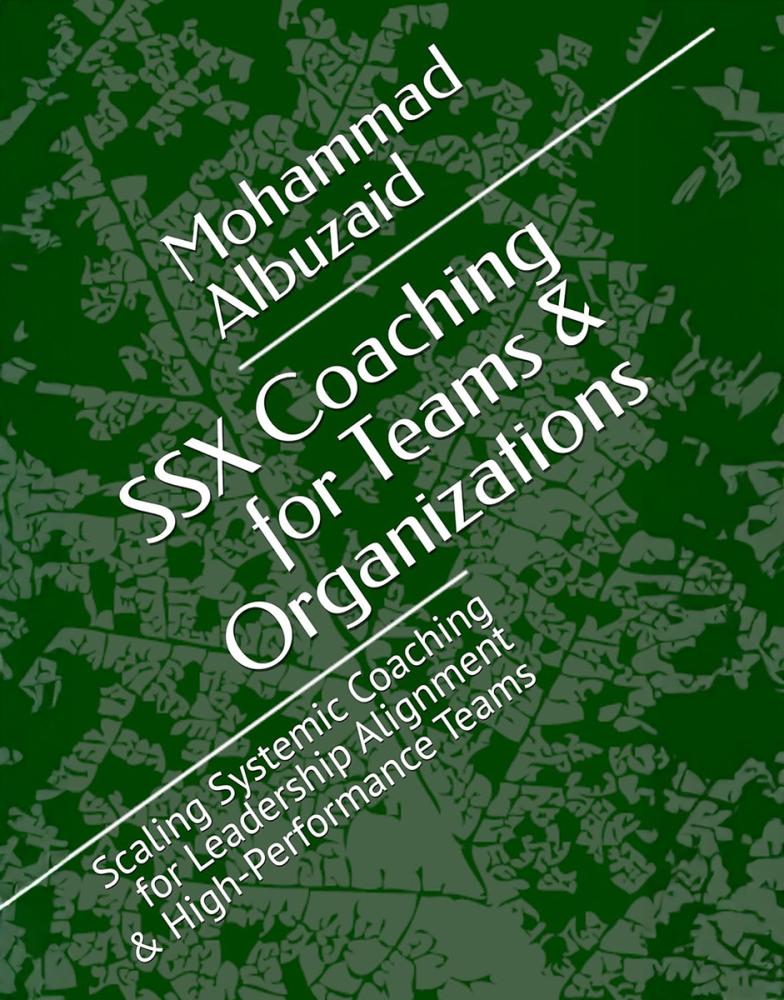
SSX Coaching for Teams & Organizations: Systemic Coaching for High-Performance Teams & Organizational Growth
SSX Coaching for Teams & Organizations – SummaryBy Mohammad AlbuzaidOverviewThis book is a comprehensive guide to systemic coaching for teams and orga...
More
SSX Coaching for Teams & Organizations – SummaryBy Mohammad AlbuzaidOverviewThis book is a comprehensive guide to systemic coaching for teams and organizations, expanding on the foundational principles introduced in SSX Coaching Fundamentals. It provides a structured approach for leaders, coaches, and HR professionals to enhance team performance, build coaching cultures, and drive organizational transformation.Key Themes & Takeaways1. Shifting from Individual to Team CoachingTraditional coaching focuses on individual leaders, but true organizational success depends on how well teams operate as a system.Coaching must address team dynamics, trust, collaboration, and alignment to unlock high performance.Case studies illustrate how systemic coaching has helped teams overcome dysfunctions, build trust, and improve decision-making.2. Leading Teams Through Change & ComplexityChange management is a major challenge for teams, and resistance is often structural, not personal.Systemic coaching helps teams build resilience, adaptability, and psychological safety.Strategies include conflict resolution, fostering psychological safety, and using coaching to support organizational transformation.3. Developing a Coaching Culture in OrganizationsA coaching culture ensures that learning and growth are continuous, not just one-time interventions.Moving from one-on-one coaching to team coaching requires embedding coaching into leadership development and performance management.Sustainable coaching models create long-term impact by integrating coaching into daily operations and organizational strategy.4. Measuring Success in Team & Organizational CoachingTraditional performance metrics often fail to capture the true impact of coaching.Systemic coaching success should be measured by team collaboration, leadership adaptability, and alignment with business goals.Feedback loops and continuous improvement cycles ensure that coaching efforts remain effective.5. Scaling Systemic Coaching Across OrganizationsTo maximize impact, coaching must scale from leadership teams to entire organizations.Cross-functional coaching breaks down silos, enhances agility, and improves business transformation efforts.Case studies highlight how multinational corporations and public sector organizations have used SSX Coaching to drive large-scale change.ConclusionSystemic coaching is more than just a tool for leadership development—it’s a transformative approach that reshapes organizations. By implementing scalable, structured coaching models, businesses can enhance collaboration, leadership, and agility, ensuring long-term success.🚀 Next StepsFor those seeking deeper mastery, this book serves as a practical guide for coaches, consultants, and executives looking to embed systemic coaching into their organizations.Contact & Further Learning📌 Author: Eng. Mohammad Albuzaid📌 Website: kanzae.com/mab📌 LinkedIn: LinkedIn Profile📌 Instagram: @malbuzaid📌 Email: [email protected] certification details, coaching resources, and training programs, visit kanzae.com/mab 🚀