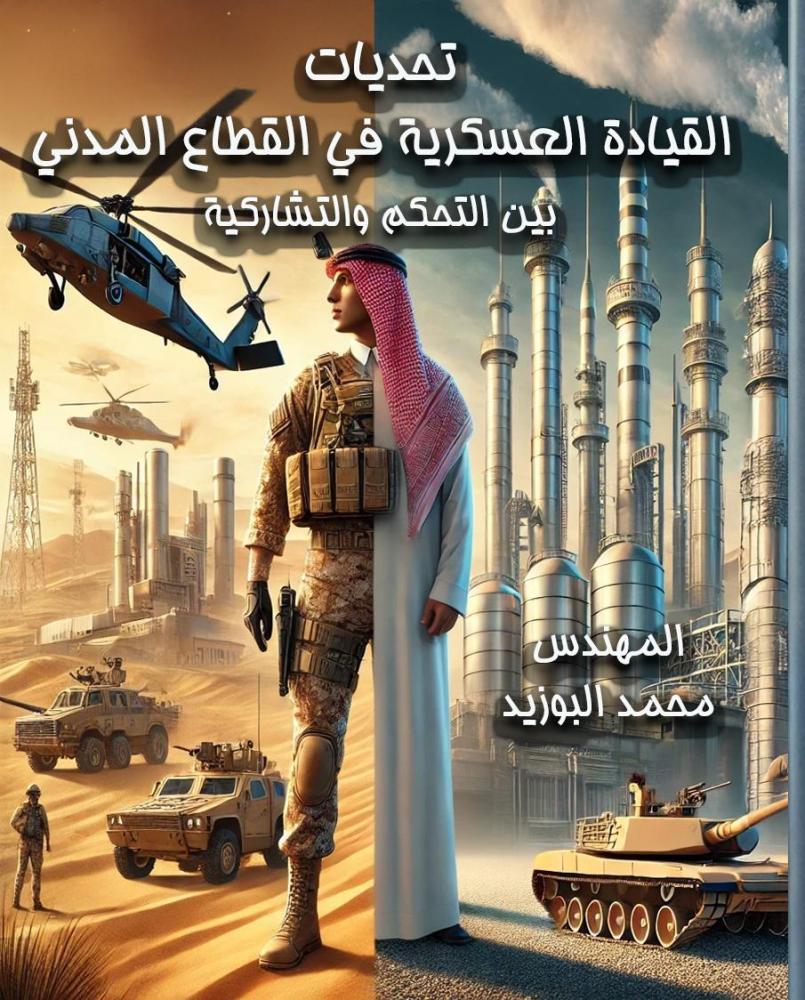
Leadership challenges in the military sector between command and partnership
Summary of the book "Military Leadership Challenges in the Civil Sector"
The book addresses a specialized topic exploring the differences between mi...
More
Summary of the book "Military Leadership Challenges in the Civil Sector"
The book addresses a specialized topic exploring the differences between military and civilian leadership, with a focus on the challenges of transitioning military leaders to work in the civil sectors. The book provides an analytical view of the structural and organizational differences between the two environments, and shows how military leaders can adapt their skills and experiences for success in civilian contexts.
The book begins by clarifying the nature of military leadership, which relies on discipline, hierarchy, and quick decision-making, then compares it with civilian leadership styles that focus on flexibility, innovation, and collaboration. The author points to cultural and organizational gaps that may hinder military leaders when transitioning to the civil sector, such as a focus on results rather than processes, and managing diverse teams that require a less strict approach.
The book also presents practical strategies to overcome these challenges, such as developing soft skills like effective communication, change management, and negotiation. It emphasizes the importance for military leaders to understand the organizational context in the civil environment, including market dynamics, stakeholder expectations, and economic considerations.
The book discusses practical examples and case studies of military leaders who successfully integrated into the civil sectors, highlighting success stories that demonstrate the ability of military leaders to innovate and solve problems effectively in complex environments.
It concludes with a set of recommendations directed at both military leaders and civil institutions to facilitate the adaptation and integration process. It offers systematic solutions to promote cooperation between military and civil sectors, enhancing mutual understanding and contributing to shared success.
The book is aimed at professionals in leadership, management, and organizational development, and serves as a valuable reference for practitioners seeking a deeper understanding of leadership challenges in different contexts and how to address them effectively.