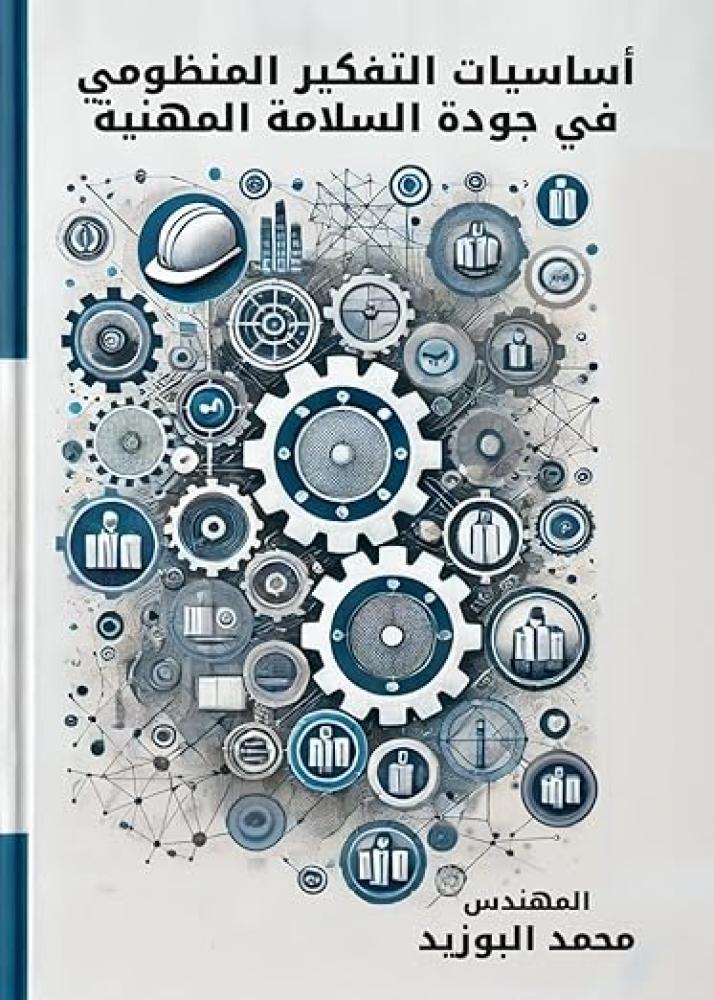
Fundamentals of systems thinking in occupational safety quality
Summary of the book "Fundamentals of Systems Thinking in Occupational Safety Quality"
Introduction: The book "Fundamentals of Systems Thinking in Oc...
More
Summary of the book "Fundamentals of Systems Thinking in Occupational Safety Quality"
Introduction: The book "Fundamentals of Systems Thinking in Occupational Safety Quality" provides a comprehensive and deep overview of how to apply systems thinking principles to improve occupational safety quality in complex work environments. The book relies on analyzing integrated systems and how to utilize systems thinking to analyze problems and solve them effectively and sustainably. It offers practical guidance based on real case studies in the field of occupational safety.
Use of artificial intelligence in preparing the book: AI was used to organize research, analyze data, and extract ideas related to systems thinking and its applications in occupational safety, which helped enrich the content and deepen understanding of various theoretical and practical aspects.
Chapter One: The concept of systems thinking and its importance in occupational safety
The book reviews the basic principles of systems thinking, clarifying the difference between traditional and systems thinking. The author emphasizes the importance of viewing systems as an integrated unit to understand the relationships between various processes and factors affecting occupational safety.
Chapter Two: Systems thinking tools for analyzing occupational safety systems
This chapter discusses methodological tools such as mind maps and causal loop analysis used to analyze complex systems and identify critical points that may impact occupational safety.
Chapter Three: Applications of systems thinking in occupational risk management
The book explores how to use systems thinking to evaluate and manage occupational risks comprehensively, considering the interaction between different factors, which contributes to reducing accidents and improving safety levels at the workplace.
Chapter Four: Strategic leadership and systems thinking in occupational safety
This chapter focuses on the role of strategic leadership in adopting a systems thinking approach within organizations, explaining how to enhance safety culture through supporting innovation and providing a safe and sustainable work environment.
Chapter Five: Challenges of applying systems thinking and how to overcome them
This chapter discusses challenges faced by organizations when implementing systems thinking, such as resistance to change and difficulty linking various processes, and proposes effective strategies to overcome these challenges.
Chapter Six: Case studies and practical models
The book presents real case studies of organizations that successfully applied systems thinking to improve occupational safety. These models explain how to apply the methodological tools in the book to achieve tangible and sustainable results.
Conclusion:
The book concludes with a call to adopt systems thinking as a comprehensive framework to improve occupational safety quality in complex work environments. It provides a roadmap for organizations wishing to enhance their capabilities to face safety challenges and achieve performance sustainability.
📚 To get your electronic copy of the book, you can visit the following link: https://salla.sa/mohammadbuzaid/XeaAogq
For consultations or training courses in systems thinking applications in occupational safety:
📧 [email protected]
📱 wa.me/966549927320
✉️ [email protected]