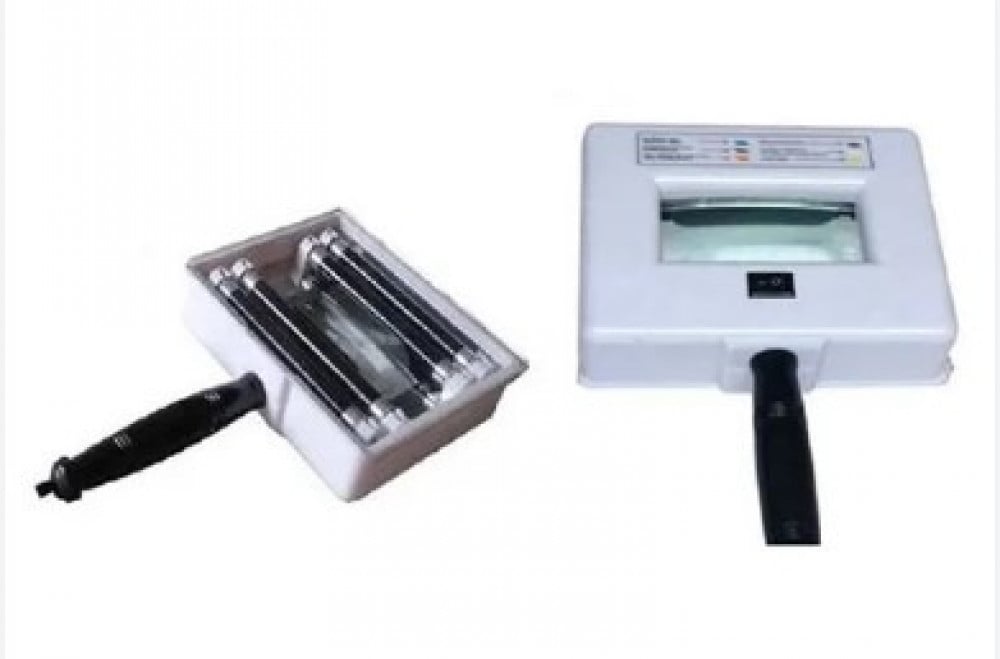
The diagnostic tool used in dermatology where ultraviolet light with a wavelength reaching 365 nm is shone inside the patient's skin, and then the technician observes any visible radiation. As in the presence of porphyrin (a group of chemical compounds that include heme, which forms the main pigment in red blood cells) that accompanies many skin diseases and fluoresces using this tool in a magenta color. This tool is effective in diagnosing many fungal and bacterial skin diseases, and it is also used in cases of poisoning resulting from the ingestion of antifreeze substances composed of ethylene glycol, which are characterized by transparency, lack of smell, and sweet taste, attracting children to drink them. Therefore, the manufacturers of this substance add a radioactive substance to help detect its presence in the urine of poisoned individuals. Recently, this lamp has been used to differentiate between hyperpigmentation and depigmentation in the skin, and thus diagnose vitiligo, which shows skin under this lamp in yellow-green or blue.